
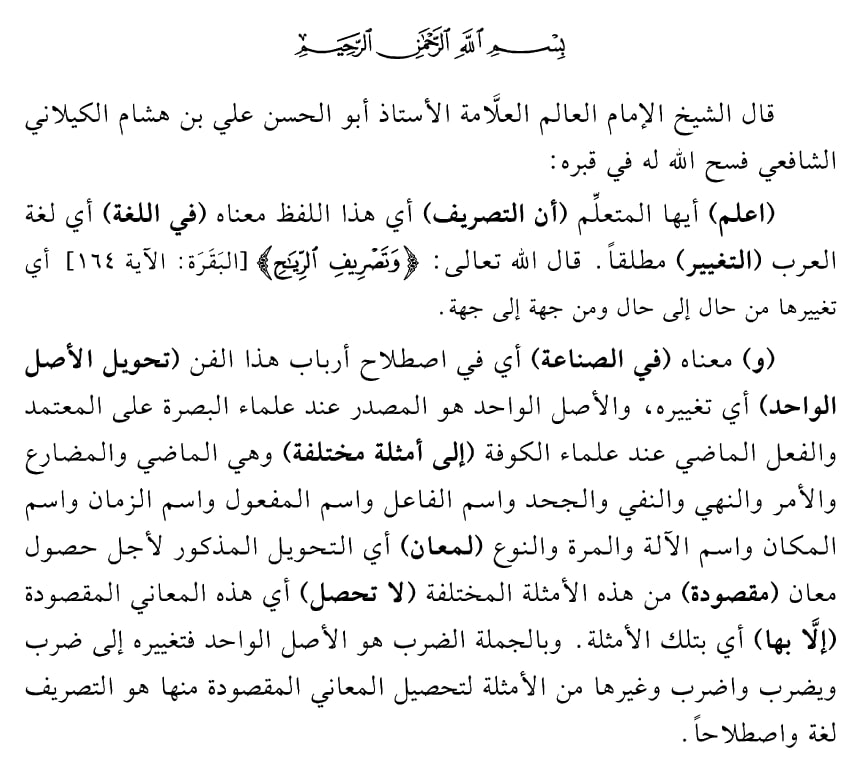
This is taken from Šarḥ al-Kaylānīyy LiTaṣrīf al-ʿIzzīyy, a commentary of the foundational text in Arabic Morphology (Ṣarf) Taṣrīf al-ʿIzzīyy by ʾImām az-Zanjānīyy. This is a beginner text every student of Arabic should cover when beginning their studies of the language.
The beginning of the book goes into defining the science of taṣrīf and what are its entailments. The original text says:
Know that at-taṣrīf linguistically is: change. Technically: the changing of the single core (al-ʾaṣl al-wāḥid) to varying forms for specified meanings; it does not acquire these meanings but through these changes.
ʾImām al-Kaylānīyy regarding this passage brings a difference regarding the single core (al-ʾaṣl al-wāḥid). There are two schools when it came to Ṣarf:
- Baṣrīyyaħ
- Kūfīyyaħ
The difference he mentions between them in this instance is that:
- The Baṣrīyyaħ say that the single core is the root word (maṣdar).
- The Kūfīyyaħ say that the single core is the past tense verb (māḍī).
The relied upon position is the root word as the past tense verb doesn’t exist for some verbs, but a root word always exists. As of this, it is the relied upon position for Ṣarf.
The differences between the two schools generally arose due to the fact that in Ṣarf you were working backwards, meaning you had the end product but had to figure out where it came from.
For example they would have the verb قَالَ but don’t know the changes (generally) so they would have to figure out what happened.
This investigative method naturally led to differences regarding morphology.
This always amazes me because in such an understudied and simple science there is still such depth that drives the one with high aspirations!
 Faqir Ink